
Stem Cell Gallery
This gallery collects images and short exhibit notes tied to the history of stem cell research. Some items are historic media artifacts; others are illustrative laboratory imagery used for education on this site. Captions explain context; they are not clinical claims. For the chronological story, see the Timeline; for definitions, see What is a stem cell?.
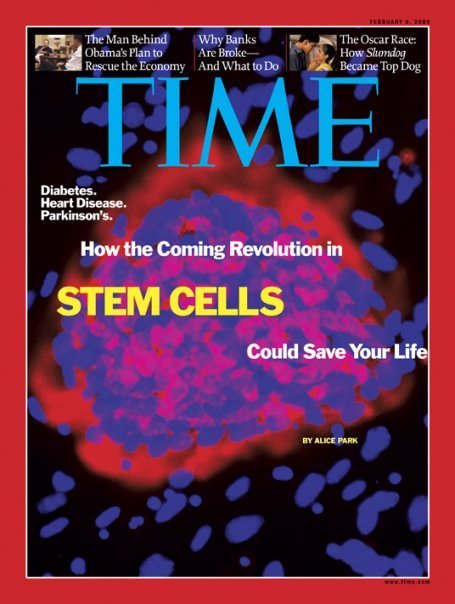
2009 TIME stem cell cover
A 2009 TIME cover framed stem cells through possible future applications, including diabetes, heart disease, and Parkinson’s disease.
Credit: TIME magazine cover (2009); displayed for historical and educational commentary. This site does not claim ownership of TIME photography.
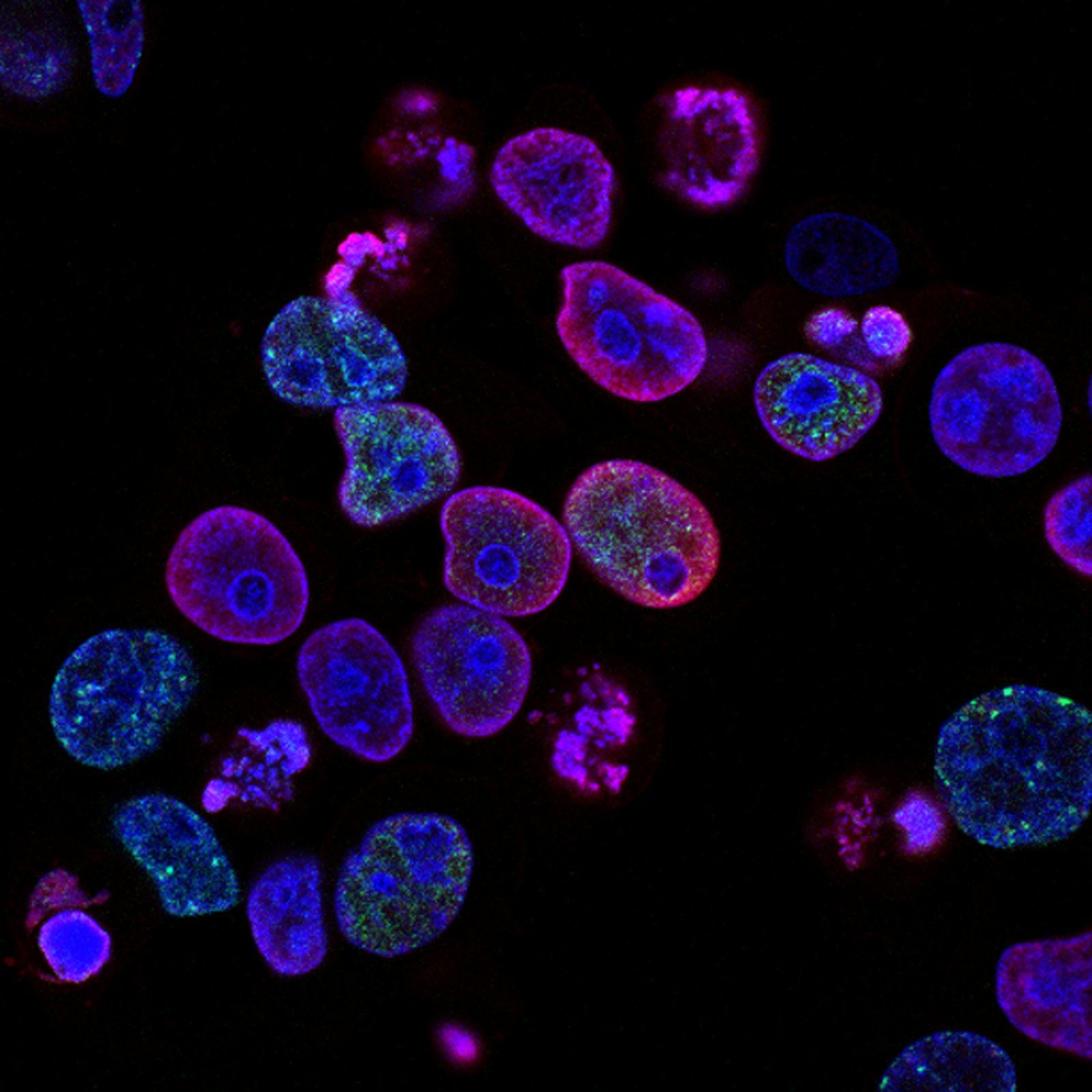
Fluorescent stem cell imagery (illustrative)
Microscopic-style imagery used on Stem Cell History to illustrate how stem cells are often visualized in educational materials.
Illustrative site imagery, not a claim about a specific historic experiment.
Culture vessels / lab motif (illustrative)
Laboratory culture motifs evoke the in-vitro environments where stem cell lines are studied.
See In vitro in the glossary. Educational illustration, not a named facility photo.
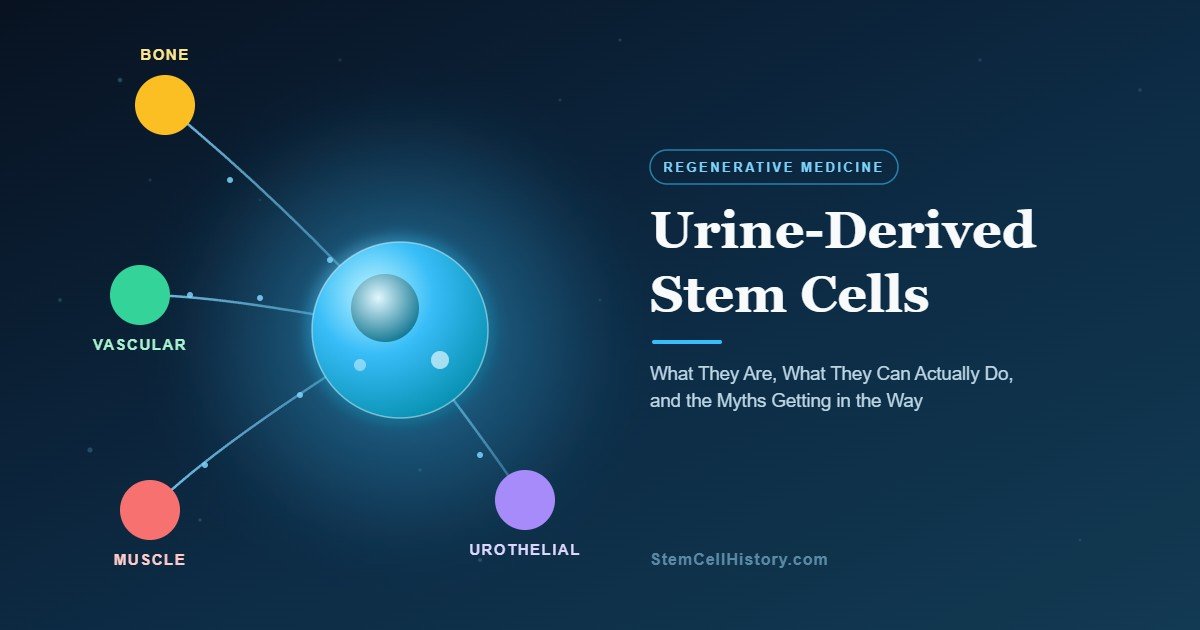
Urine-derived stem cell research visual
Scientists have investigated cells obtained from urine as a non-invasive starting material for laboratory study and reprogramming.
Educational context only; not medical advice or a claim about clinical efficacy.
Related: Urine-derived stem cells

Stem Cell History brand mark
Site identity for this independent educational history project.
Displayed as a project mark, not an institutional endorsement.
Related: About Stem Cell History
Exhibit note: Till & McCulloch, 1961
Colony-forming assays in mice provided influential evidence for blood-forming stem cells and helped establish an experimental way to test stem-cell activity.
Text exhibit: read the result alongside transplantation, spleen colonies, and later work refining the stem-cell concept.
Exhibit note: Human ES cells, 1998
The Thomson-era derivation of human embryonic stem cell lines marked a culture watershed: human cells could be maintained in a pluripotent state for laboratory study.
The scientific opportunity arrived alongside major ethical and policy questions.
Related: Timeline and What is a stem cell?
Exhibit note: iPS cells, 2006–2007
Reprogramming work associated with the Yamanaka–Thomson era showed how mature cells could be returned to a stem-like state, changing questions about cell identity and disease modeling.
iPS research also reshaped conversations about sources, consent, safety, and translation.
Related: What iPS cells changed
Exhibit note: U.S. policy turning points
Dickey–Wicker, the Bush-era funding framework, and Obama-era policy changes illustrate how federal funding debates shaped the boundaries of embryonic stem-cell research.
Policy history is distinct from a clinical recommendation and should be read in legal and scientific context.
Related: U.S. embryonic stem-cell policy
How to use this gallery: Pair these visual exhibits with the Glossary and Books for longer historical and ethical perspectives.